Basketball Card Parallels & Print Runs Explained: How to Read Any Rainbow
The complete reference to basketball card parallels and serial numbering: what a parallel actually is, how to read a print run like /99 or 1/1, why unnumbered parallels such as the Silver Prizm and the Topps Chrome Refractor exist, how the Prizm, Optic, Select, Mosaic, Chrome and Bowman ladders are structured, and how retail and hobby parallels differ.


Every modern basketball card carries two numbers, and new collectors usually only notice one of them. There’s the card number — the position in the checklist, the same on every version of that card. And on a lot of cards there’s a second number, foil-stamped somewhere near the edge, that reads like a fraction: 17/99.
That second number is the whole modern hobby in miniature. It tells you exactly how many of that card exist, which is the one piece of hard, verifiable data on the card — no opinion, no estimate, no market chatter. Learn to read it, and you can walk into any product from any brand and immediately understand what you’re holding and where it sits.
This is the complete reference to parallels and print runs in basketball cards: what a parallel actually is, how serial numbering works, why some of the most collected parallels carry no number at all, how each major brand structures its ladder, and where retail and hobby versions diverge. It’s the vocabulary that every set review and player guide on this site assumes you already have.
One thing you will not find here: what any of these cards is worth. We never quote or speculate on card values — print runs are facts, prices are not. When you want to see what something actually trades for, look at live listings and completed sales, not an article.
What a parallel actually is
A parallel is an alternate version of a card that already exists in the set. Same player, usually the same photograph, and — this is the part that matters — the same card number as the base card. What changes is the finish: a different color, a different foil or refractive treatment, a different border. And it’s printed in smaller quantities than the base version.
That shared card number is the defining test, and it’s more useful than any visual cue. If a card is numbered 214 in the base set, then the Silver of that card, the blue numbered version of that card, and the 1-of-1 of that card are all also card 214. A base checklist is therefore a parallel checklist too — which is exactly why serious collectors treat set checklists as the foundational reference document of the hobby.
The word for the full stack is a rainbow: every parallel version of one specific card, from the base up to the 1-of-1. Chasing a single player’s rookie rainbow across an entire set is one of the most popular long-term projects in modern collecting, and it’s also the most demanding, because the top of every rainbow is a card only one person on earth can own.
How to read a serial number
Serial-numbered cards carry a stamp that looks like a fraction. Read it like this:
- The number after the slash is the print run. A card marked
/99had ninety-nine copies made. That’s the total population of that exact card — color, set, player, everything. - The number before the slash is your copy.
43/99is the forty-third of ninety-nine. It is the same card as7/99; the copy number changes nothing about what the card is. Two exceptions collectors do care about: the first copy (1/99) and the last copy (99/99), plus jersey-number matches — a card numbered23/99of a player who wore 23 is a favorite novelty. 1/1means one of one. One copy exists. There is no second.
The stamp is usually foil-printed on the card front, tucked into the design near a border or nameplate; some products put it on the back instead. If you’re squinting at a card wondering whether it’s numbered, check both faces before concluding it isn’t.
What print runs mean in practice
Exact colors and their runs change every single year and differ between formats, so treat the table below as a map of the tiers rather than a claim about any specific set. These are the denominators the modern basketball hobby uses most often:
| Print run | Tier | What it usually means in a set |
|---|---|---|
| Unnumbered | Base parallel | The keystone shiny version (Silver, Refractor, Holo) — no stated population |
| /299 – /149 | Entry numbered | The first genuinely numbered rung; the most attainable colors |
| /99 – /75 | Mid numbered | The tier most collectors think of as “properly numbered” |
| /49 – /25 | Short numbered | Meaningfully scarce; often the highest rung available in retail |
| /10 – /5 | Premium | Typically hobby-only; a real pull from a hobby configuration |
| /1 | One-of-one | The crown of a card’s rainbow. Exactly one exists |
Two cautions a 20-year collector would add. First, a lower number is not automatically a more sought-after card — a /5 of a fringe rotation player and a /5 of a franchise cornerstone are the same scarcity and nothing alike in demand. Second, print run is not condition. A /25 with a soft corner and a badly off-center front is still a /25 with a soft corner; run the centering calculator before you assume a numbered card is a grading candidate.
Why the most famous parallels have no number at all
Here’s the wrinkle that confuses almost everyone at first: several of the most collected parallels in basketball carry no serial number.
The Silver Prizm is unnumbered. The standard Topps Chrome Refractor is typically unnumbered. The Donruss Optic Holo is unnumbered. These are the keystone parallels of their respective brands — the shiny version of every base card, the one collectors mean when they say they want “the Prizm rookie” or “the Chrome refractor” — and none of them tells you how many were made.
What you can know is the ordering. Manufacturers build these ladders deliberately: base at the bottom, the unnumbered keystone above it, then the serial-numbered colors climbing to the 1-of-1. The keystone is scarcer than base and more plentiful than the numbered colors. That’s the honest statement. Anything more precise — a specific population figure for a Silver Prizm — is a community estimate, not published data, and you should treat any confident-sounding number as exactly that.
Recognition also does its own work here, independent of scarcity. The unnumbered keystone parallels are the ones the whole hobby can identify on sight, which is why they anchor the modern rookie chase for players like Victor Wembanyama and Cooper Flagg even though a numbered color from the same set has a smaller print run.
The brand ladders: how each set is structured
Every major basketball brand runs the same underlying architecture — base, keystone parallel, numbered colors, 1-of-1 — but each names its rungs differently. This is the translation table.
Panini Prizm — the reference implementation. Base cards on ordinary stock; the Silver Prizm as the unnumbered refractive keystone; a ladder of serial-numbered color Prizms above it; the Black at 1-of-1 on top. Prizm’s naming became the hobby’s shared language, which is why “prizm” is now used loosely as a generic term for any refractive parallel. See the 2024-25 Prizm review for how the final Panini-era Prizm laid this out, and the 2023-24 Donruss Optic NBA Basketball Factory Sealed Retail Box… if you want to rip the ladder yourself.
Donruss Optic — the same idea, different names. Optic is Donruss printed on Prizm-style chromium stock. The unnumbered Holo is its keystone, numbered colors climb above it, and the Gold Vinyl is Optic’s celebrated 1-of-1. Optic also carries the Rated Rookie subset, which is a designation rather than a parallel — a Rated Rookie has its own parallel ladder like any other card. The Optic blaster is the low-cost way to see the structure firsthand.
Panini Select — the ladder times the tier. Select’s signature is that it splits the base set into tiers: Concourse, Premier Level, and Courtside, each with its own photography and design. Every tier then gets the full parallel ladder on top, which multiplies the number of versions of a single player dramatically — a Select rainbow is a substantially bigger project than a Prizm one. The Select review walks the tier structure, and the Select mega box is the common retail entry.
Panini Mosaic — the pattern-finish cousin. Mosaic applies its distinctive geometric pattern to the same architecture: a keystone parallel above base, numbered colors above that, a 1-of-1 at the top. If you understand Prizm, you understand Mosaic in about thirty seconds.
Topps Chrome — where refractors were invented. “Refractor” is Topps’ term and Topps’ technology; Panini’s “Prizm” is the equivalent concept under a different name. Chrome runs base → Refractor (the typically unnumbered keystone) → patterned and colored refractors, with the numbered colors climbing to the SuperFractor at 1-of-1. With the NBA license now at Fanatics, Chrome is the new-era flagship — see the 2025-26 Topps Chrome review and the Chrome mega box.
Bowman — the prospect variant. Bowman uses the Chrome refractor ladder and the SuperFractor 1-of-1, but its distinguishing feature is the 1st Bowman designation marking a prospect’s first Bowman card. That’s a designation, not a parallel — and as our Bowman review explains, a prospect card is not the same thing as an RC-logo rookie card, a distinction that catches out a lot of new buyers.
If you want to compare the formats that actually contain these ladders side by side, our best basketball card boxes roundup covers what each product delivers.
Retail parallels vs. hobby parallels
The same set is not the same set in every box. Manufacturers deliberately split parallel colors between distribution channels:
- Retail-exclusive parallels appear only in the boxes, blasters, hangers and megas sold through mass-market shelves. They’re genuinely exclusive — you cannot pull them from a hobby box — and they’re a real part of the appeal of ripping retail. The Topps holiday mega is a textbook example of a retail configuration built around its parallel content.
- Hobby-exclusive parallels live in hobby boxes sold through card shops and distributors, and this is where the shortest print runs and the on-card autographs generally sit.
The practical consequence: the top rungs of most ladders are not reachable from retail. That isn’t a reason to avoid retail — retail has its own exclusive colors and is where most collectors reasonably spend — but it is a reason to set expectations correctly before you rip. Our hobby vs. retail explainer covers how the two channels differ across configuration, odds, and packaging.
Parallels, condition, and grading
There’s a physical consequence to all this that costs collectors real money. Refractive parallels are harder to grade well than base cards. The chromium stock that makes a Silver, a Refractor, or a Holo look the way it does is also the stock that shows surface scratches, print lines and edge chipping under a grader’s light — and these sets are notoriously centering-sensitive.
So before you send a numbered parallel off to be slabbed:
- Measure the centering. Use the card centering calculator — refractive parallels miss on centering more often than base cards do, and a miss is usually decisive.
- Check the surface under angled light. Rotate the card; scratches on chromium hide under direct light and appear instantly off-axis.
- Run the economics before you submit. The grading ROI calculator and our grading cost guide exist precisely so the fee math happens before the card ships, not after. The full submission process is in how to grade basketball cards.
And protect them from the moment they leave the pack. Numbered parallels are frequently printed on thicker stock than base cards, so match the holder to the card’s thickness using the point ladder in our card sizes and dimensions reference. For the base and keystone parallels you’re keeping rather than slabbing, a 440-pocket binder is the standard way to build a rainbow you can actually look at.
Five mistakes worth not making
- Calling an insert a parallel. Check the card number against the base checklist. Same number, different finish means parallel; separate themed checklist means insert.
- Assuming numbered beats unnumbered. They’re different systems. An unnumbered keystone parallel of a superstar and an obscure
/199color of a bench player are not comparable on the strength of a stamp. - Trusting quoted population figures for unnumbered parallels. Nobody outside the manufacturer knows. Confident numbers circulating online are estimates.
- Buying retail expecting hobby rungs. The lowest-numbered parallels and on-card autographs are structurally hobby-side. Rip retail for the retail-exclusive colors, which is a genuinely good chase on its own terms.
- Sleeving a numbered parallel carelessly. Thicker stock, refractive surface, tiny print run — these are the cards where a forced toploader or a bare stack does the most damage.
The bottom line
Parallels look chaotic from the outside and are actually one of the most orderly systems in collecting. Every brand runs the same skeleton — base, an unnumbered keystone, a climb of serial-numbered colors, a single 1-of-1 at the summit — and only the names change between Prizm, Optic, Select, Mosaic, Chrome and Bowman. Learn to read the stamp, learn which rung the keystone occupies, and know which rungs your format can actually reach.
From there: keep a running record of what you own with the collection tracker, read the set reviews for how any specific year lays out its ladder, see what’s coming on the release calendar, and browse graded cards if you’d rather buy a parallel already slabbed than chase and grade one yourself.
Recommended Products for This Guide
2023-24 Donruss Optic NBA Basketball Factory Sealed Retail Box 24 Packs of 4 Cards
In Stock at AmazonPanini·2023-24·Retail box·24 packs
- Great retail value
- Multiple packs included
2025-26 Topps Chrome Basketball - Factory Sealed - Mega Box
In Stock at AmazonTopps·2025-26·Mega box
- Extra packs included
- Exclusive mega content
2024–25 Panini Select NBA Basketball Mega Box – Official Trading Cards – Retail Exclusive Blue & Red Prizms, Rookie Cards & Inserts – Sealed Box
In Stock at AmazonPanini·2024-25·Mega box
- Extra packs included
- Exclusive mega content
2021/22 Panini Optic Donruss NBA Basketball Factory Sealed Blaster Box - 6 Packs - 30 Total Trading Cards
In Stock at AmazonPanini·2021-22·Blaster box·6 packs
- Great retail value
- Multiple packs included
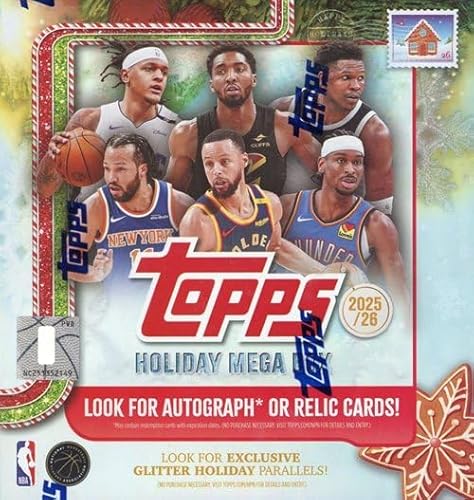
2025/26 Topps Basketball HOLIDAY MEGA HUGE 100 Card Box with (8) Parallels
In Stock at AmazonTopps·2025-26·Mega box
- Extra packs included
- Exclusive mega content

RONMONG Basketball Card Binder, 440 Pockets, Protective Trading Card Album | Double Sided Sleeves for 2026 Basketball Cards, Sports Card Storage and Display, Great Gift for Collectors, Boys and Fans
In Stock at AmazonEssential supplies to protect and display your card collection.
- Protects your collection
- High quality materials